
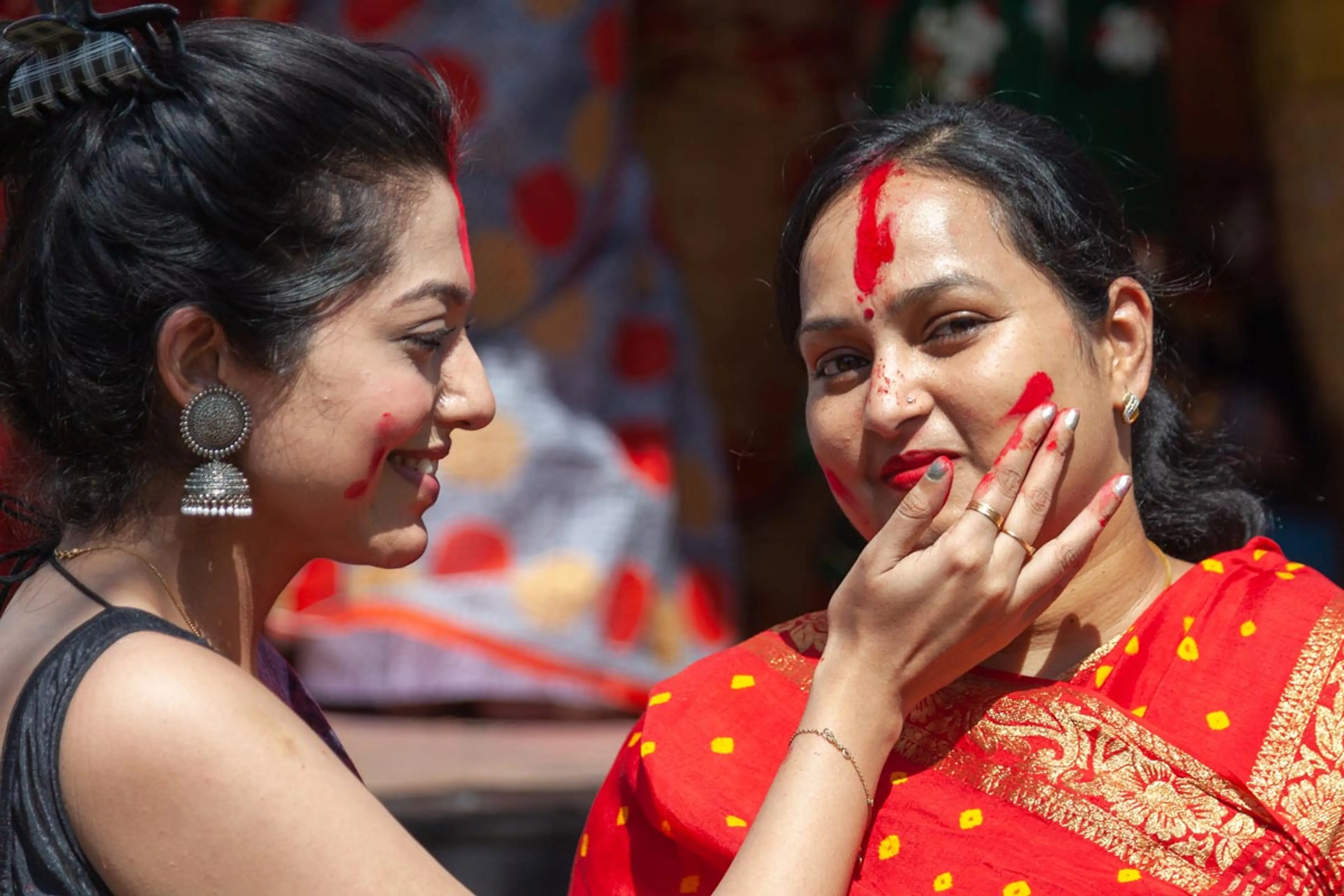
West bengal
What ultimately makes Bengal a unique destination, one that continues to inspire travellers exploring West Bengal tourism in search of culture, heritage, and landscape? Is this because Bengal was the centre of a cultural renaissance, which took place much before the two great continents, America and Australia, were discovered — a renaissance that still echoes through every thoughtful Kolkata tour undertaken by curious visitors? Is this why most Indian Nobel Laureates and a galaxy of stalwarts in Indian fine arts, music, theatre, literature, and politics hailed from Bengal, giving modern travellers a reason to look deeper into the rich layers that support the growth of West Bengal tourism in Darjeeling, Kolkata, and beyond? May it be the exemplary spirit of brotherhood and tolerance among diverse religious and ethnic groups, which harmonise even today’s time, forming the gentle social fabric that often attracts travellers who begin their journey through convenient platforms like West Bengal tourism online booking, seeking more than just attractions?
Can this also be the subtleties of its food preparation, which no other countries or communities could succeed in replicating even today? Is it due to a prevalent slogan, “What Bengal thinks today, India thinks tomorrow”? Or is this because of a brilliant climate, pleasant and varied landscape, extremely fertile alluvial deposits, and abundant water sources with excellent connectivity that attracted different foreign dynasties to invade this region time and time again — the same waterways and forest paths that today guide nature lovers on a peaceful Sundarban tour from Kolkata, where mangroves whisper their ancient stories? For many travellers, even a thoughtfully curated Sundarban tour package from Kolkata becomes more than a journey; it becomes an immersion into a land that has always lived in harmony with rivers and tides.
A total Bengal remains in all of these and much more. It has an incredible range of natural diversity stretching across from the seashore and reaches up to the Great Himalayan ranges with varied life forms — a diversity that enriches West Bengal tourism, inviting visitors from the tropical delta to the cool ridges of the north. From the gentle hills of Darjeeling humming with tea-scented breezes to the deltaic labyrinths of the Sundarbans, the land offers contrasts that feel almost poetic. The Spirit of Bengal lies in its festivities, as Bengalis celebrate more festivals than a year has its months — as a proverb in Bengal says, Thirteen Festivals in Twelve Months. Every festival, whether in Kolkata, the countryside, or the mountain towns that anchor West Bengal tourism in places like Darjeeling, becomes a canvas of colour, rhythm, and storytelling.
The recorded history of Bengal started about 1400 years back. Yet, a recent archaeological excavation suggests that this land’s living existence goes back 20,000 years or more — yes, you read it correctly, twenty thousand years of continuous human presence. Such longevity makes every Kolkata tour, every walk through an old neighbourhood, every pilgrimage to a temple or monastery feel like a conversation with time itself. It explains why West Bengal tourism thrives not only on attractions but on atmosphere — the feeling of stepping into a living, breathing civilisation.
No wonder Bengal should have richness in various fields. And we heartily invite you to experience them, whether through a serene Sundarban tour from Kolkata, a heritage-filled exploration of the capital, or a Himalayan getaway shaped by the timeless charm of West Bengal tourism Darjeeling.
Travel Destinations in West bengal
Festivals
Durga Puja
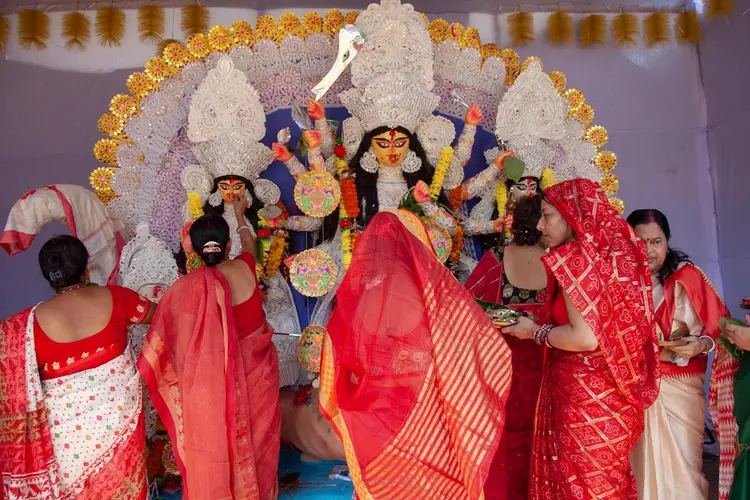
Indian mythology celebrates a united power that combines masculine authority with a natural or feminine influence. Among all divine beings, Goddess Durga has been Kolkata's favourite, shaping the very essence of Durga Puja in West Bengal and inspiring countless visitors eager to learn about Durga Puja in Kolkata. In this vast canvas of devotion and celebration, the grandeur of Belur Math Durga Puja often stands as a spiritual landmark, drawing people into an atmosphere where faith meets serene architectural beauty.
Durga Puja is the most awaited holiday of Bengalis, or you may say that all the people residing in the city rise to revel during this time. The city shines like a queen with designer lights on every single street, the rhythmic sound of dhaaks and mantras resonating from every nook and corner, people thronging the roads wearing vibrant clothes – all of it turns the festival into a scene of classic splendour, a true reflection of the wider West Bengal festival spirit. Whether one wanders through the historical lanes of Bagbazar Durga Puja or explores the elegant artistry of Ballygunge Durga Puja, every neighbourhood adds its own flavour to the celebration.
'Durga Puja' is celebrated for five days. This is the time when the whole family reunites to welcome their estranged daughter. Her stay at her natal home for a few days is a call for celebration and rejuvenation. Members of the family make most of it as a good time will be over very soon. If observed keenly, the Durga Puja Festival is nothing but a broader representation of a familiar domestic story. It is the month of 'Aswin' in the Bengali Calendar when the people of Kolkata get engrossed in the festive feeling, moving from the sacred calm of Belur Math Durga Puja to the vibrant pandals across the city – each contributing to the living, breathing narrative of Durga Puja in West Bengal, where devotion, artistry, and emotion flow into one seamless celebration.
Deepavali – The Festival of Lights
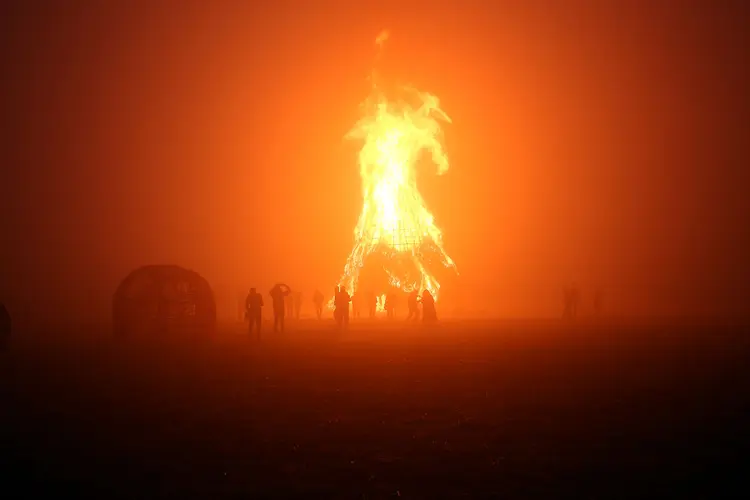
The literal meaning of Deepavali suggests several lamps in a row. Essentially, this festival of lights is celebrated to illuminate human life and boost the spirit of the earth, choreographed with different kinds of lighting and firecrackers. In recent years, the celebration of West Bengal Deepavali has grown into a distinct cultural expression, blending traditional light rituals with the emotional depth found across the state. This wider mood echoes through neighbourhoods where the essence of Bengal Deepavali glows softly in rows of lamps and the warmth of shared gatherings.
As stated by Hindu mythology, Goddess Kali is the angriest and most ferocious of the ten incarnations of Devi Durga. The image popular among the devotees is a gruesome portrayal of an unclothed woman with a violent face; it's only her long black locks and a garland of skulls that cover up her private body parts. The name of the deity is derived from the Sanskrit word 'Kaal', which means time. She is considered the Goddess of Time, whose appearance suggests a change or the end of darkness more precisely — a symbolism that becomes even more profound during Deepavali festival Kolkata, when the city lights seem to rise against the shadows themselves. This spiritual connection is reflected across many homes and temples during West Bengal Deepavali, where the worship of Kali merges powerfully with the luminous spirit of the festival.
A shining city replete with gatherings of friends and family. Magnificently decorated clay lamps on the walls, stairs, and doors of every house, chirpy children all around enjoying a bonfire and festive fireworks, and a colourful network across the city by the strings of electric lights is a visual experience that hardly fades or grows stale with time. The energy of Bengal Deepavali lingers in these moments of laughter, prayer, and radiance, while the unmistakable glow of Deepavali festival Kolkata fills the night sky with memories that return year after year.
Dol or Holi – The Festival of Colours
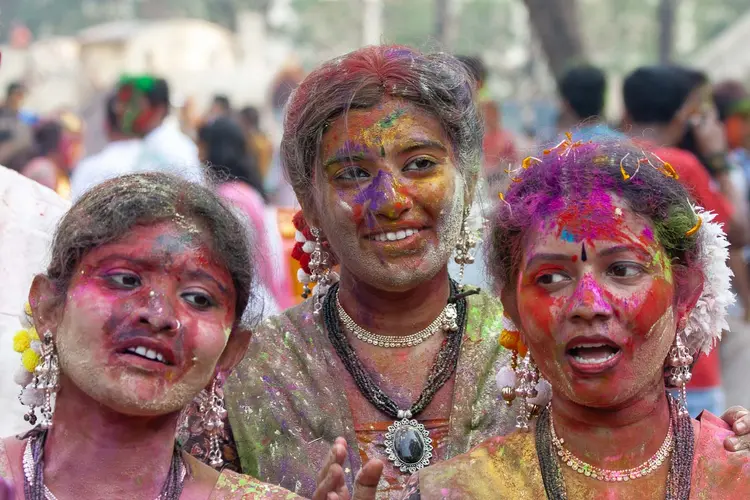
Spring in Bengal and India comes with the colourful wind to celebrate love and the victory of good over evil. The smearing of colours is a ritual, expressing love and reassurance of the prevalent goodness, a feeling deeply associated with Holi in West Bengal and the graceful cultural traditions surrounding it. Once you step inside Holi in Kolkata during spring, you will be attacked by the smell of fragrant aabir and malpoa (a favourite dessert made of flour, semolina and sugar).
This will immediately bring to your mind the famous Holi song sequence from the film Mother India. A very emotional and cheerful Holi sequence takes place in Shantiniketan, Bolpur, some hundred kilometres away from Kolkata during Holi. It is popularly referred to as Basanta Utsav (Spring Festival) there, and the charm of Holi at Shantiniketan—often celebrated as the iconic Santiniketan Holi Festival—is truly incomparable. The celebration is of dance, music, and lots of organic colours—the whole celebration has very spiritual goodness attached to it. The sound of the Ektara mingled with the tinkling of ghungroos makes the environment merely majestic and echoes the devotional tones witnessed during Holi in Mayapur, where colours merge with chants in a uniquely serene atmosphere.
Peoples
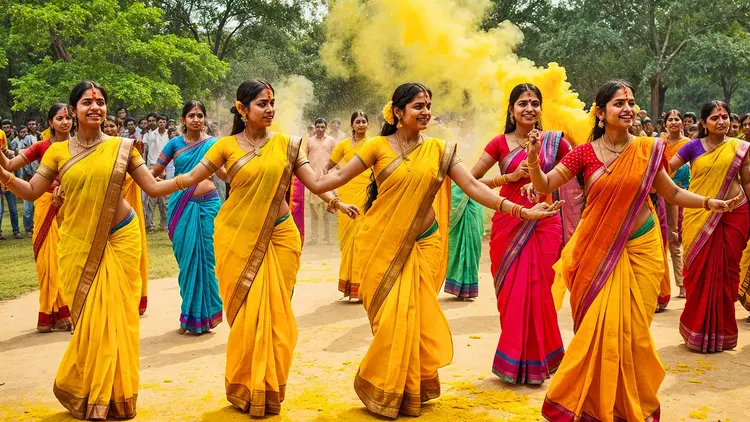
The Living Spirit of West Bengal
The people of West Bengal have always carried within them an extraordinary harmony, woven from centuries of shared memory, layered histories, and quiet resilience. Their story is not a single thread but a sprawling tapestry, where poets, farmers, artisans, scholars, and mystics move together across time. Through their lives and rhythms, one witnesses the deep pulse of West Bengal culture, shaped gently by rivers, forests, and the monsoon skies that have watched over them for thousands of years.
Across the plains, the hills, and the red earth plateaus, the ancient tribes of West Bengal preserve their own luminous worlds—ritual songs rising at dusk, dances that echo forest wisdom, and languages that carry the scent of earth untouched by haste. The Santals, Oraons, Mundas, Bhumij and others form an essential strand of the state’s identity, keeping alive a consciousness that predates recorded history. Their customs, myths, and kinship bonds flow into the wider stream of bengal culture and tradition, enriching it with depth and texture.
In the bustling cities and quiet villages alike, the people of West Bengal nurture a way of life where intellect and emotion sit side by side. They greet festivals with fierce enthusiasm, speak with lyricism even in everyday conversation, and carry an instinctive love for literature, music, theatre, and debate. This blend of artistic passion and philosophical searching forms the living, breathing soul of West Bengal culture, radiating through everything from food rituals to family gatherings, from the morning chants at the riverbank to the evening addas where ideas stretch late into the night.
All these countless expressions—tribal folklore, rural customs, the literary renaissance, spiritual traditions, maritime histories, and urban creativity—merge into what can only be described as the vast cultural heritage of West Bengal. It is a heritage that does not merely survive in monuments or manuscripts but moves continuously through the gestures, celebrations, and quiet devotions of its people. And within this heritage, the presence of the tribes of West Bengal remains an anchor, reminding every generation that identity is strongest when rooted deeply in memory and shared humanity.
Foods
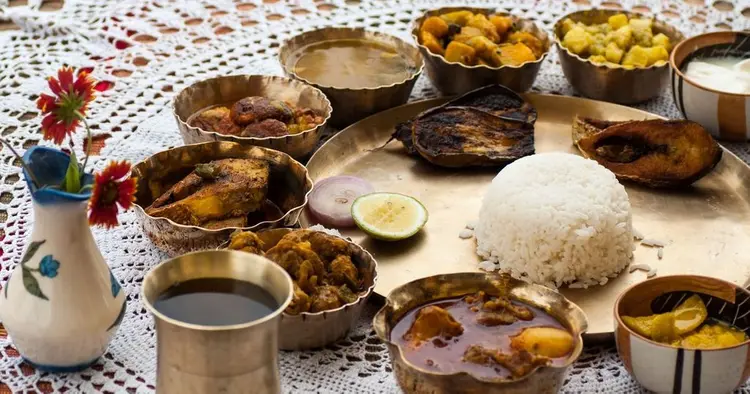
The Flavours of Bengali Food Culture
The food of Bengal has always carried a quiet magic, shaped by rivers that flow endlessly and by fields that breathe with harvest songs. In every home, in every bustling corner of the cities, one finds an intimacy with ingredients, an instinctive understanding of how flavours speak to memory. The people here have grown up with the gentle warmth of rice and fish, the fragrance of mustard oil, and the comfort of slow-cooked meals that echo stories older than written history. This is the heart of bengali cuisine, a tradition that feels both ancient and alive.
Across Kolkata, where cultures meet and voices rise in the rhythm of everyday life, the allure of kolkata street food forms another chapter of Bengal’s edible identity. Here, flavours burst with confidence—spices mingling with laughter, the crunch of evening snacks blending with footsteps on old pavements. This street-side theatre adds its own lyricism to the grand narrative of bengali cuisine, proving that the culinary art of the land thrives as much in simplicity as in sophistication.
As cities expand and travellers wander through Bengal’s evolving culinary landscape, they often turn to guides, searches, and local whispers—whether through restaurant listings curated by modern tastes or through neighbourhood suggestions that arise in conversations over tea. Even phrases like best places for dinner near me or best place to eat lunch near me sometimes lead to unexpected discoveries: small eateries near the riverbank, old-family kitchens in historical quarters, or contemporary spaces carrying forward the timeless flavours of the state.
Beyond the familiar staples lies a youthful hunger for variety—snacks that suit modern pace and urban energy. This has given rise to new blends and bold interpretations, forming a contemporary fast food list that stands alongside traditional meals without losing the region’s cultural soul. From classic rice-and-fish meals to fusion plates in cafés, Bengal’s food landscape welcomes every appetite.
Through all these shifting tastes, the state remains deeply connected to its culinary roots. Every dish, whether found in a quiet household or a busy market lane, tells a story of rivers, soil, festivals, labour, love and identity. It is this harmony between tradition and change that makes Bengal’s food culture not merely a collection of recipes, but a living expression of heritage.
Climates
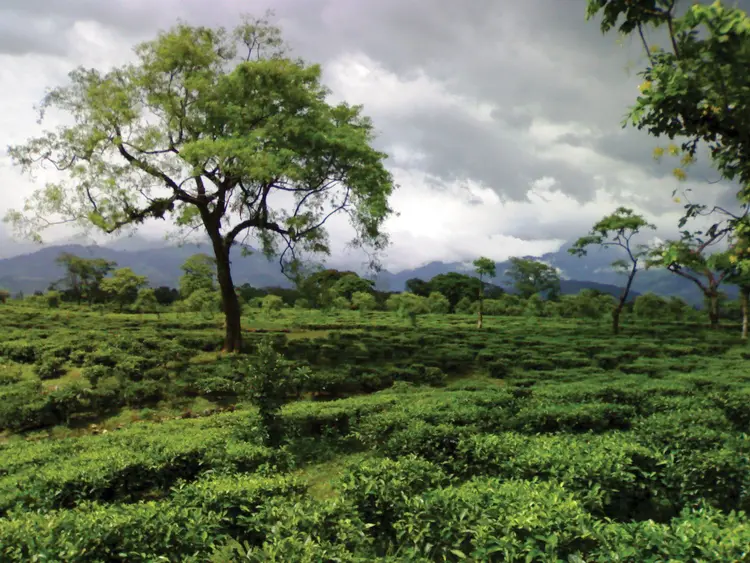
West Bengal Climate and Seasons: Hills to Sea
The West Bengal climate unfolds like a long, breathing story, moving from the cool whisper of the Himalayan foothills to the restless heartbeat of the Bay of Bengal. In the northern heights, the air carries the clarity of untouched mornings, and the shifting moods of climate in Darjeeling feel almost musical. Travellers often speak of weather in Darjeeling as if it were a living companion—gentle in some seasons, dramatic in others, forever weaving mist through pine-lined slopes.
In early spring, Darjeeling weather in March brings a tender freshness, the hills stirring awake under soft sunlight. As autumn arrives, the charm of Darjeeling weather in October paints the valley with crisp air and golden light, the kind that lingers on tea leaves before drifting into memory. Even the warmth of summer carries its own grace; the climate in Darjeeling in May balances sunlight with mountain breezes, allowing the hills to breathe with effortless ease. And when winter settles quietly, the Darjeeling climate in December surrounds the region with a stillness that feels almost sacred.
But Bengal’s story does not end in its mountains—it travels southward, where the land leans gently into the West Bengal sea. Here, the coastline stretches wide and shimmering, carrying with it the scent of salt, fish, and ancient tides. Families arrive at Digha beach, children racing toward the waves, while the older shores — Digha beach in West Bengal — hold decades of seaside memories in their rolling foam. Nearby, the broader sands of New Digha beach spread out under the open sky, where mornings arrive with slow, gold-tinted light. This stretch of the seacoast Digha is where Bengal meets the ocean with quiet confidence, sharing its monsoons, its storms, and its sunsets with equal acceptance.
Between these distant worlds—the mountains and the sea—the West Bengal climate carries countless rhythms: the heavy monsoon rains across the Gangetic plains, the red-soil heat of the western uplands, the misty tea gardens of the north, and the tidal winds of the south. It is a climate shaped by rivers, forests, salt, and altitude, each layer contributing to the rich sensory experience that makes Bengal not merely a place, but a living environment of extraordinary diversity.